

You sit down at your desk to complete an urgent project. You open your favorite AI tool to generate code or polish an article. Suddenly, you see an error screen. Your premium access has been downgraded to the slow free tier.
You check your email. Your bank statement shows a failed transaction notice. You try to enter your credit card details again. You double-check your account balance. Everything looks completely fine. Yet, the foreign payment gateway rejects your transaction.
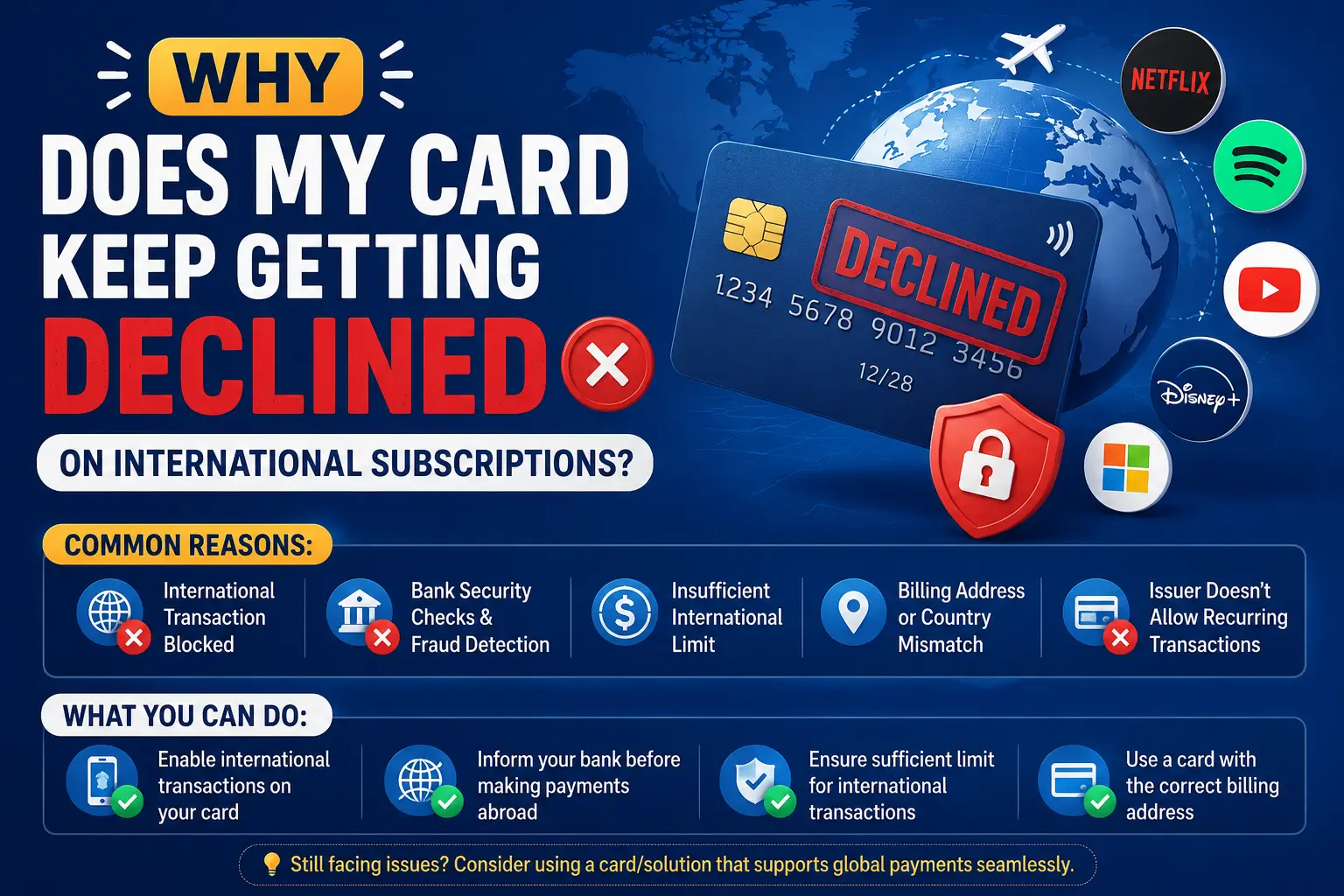
This scenario happens to millions of professionals across India every single month. It is incredibly frustrating. It stalls your workflow and wastes valuable hours. If you are wondering why does my card keep getting declined on international subscriptions, you are not alone. The root cause is not a broken website or a lack of funds. The issue stems from a combination of strict local banking regulations and international payment architectures.
To understand how to keep your tools active, you must look at how Indian banks talk to foreign payment gateways. You can also analyze your current setup using our free Is This Deal Safe Checker to evaluate transaction issues.
The Core Reason: The RBI E-Mandate Framework
The single biggest reason your automated payments fail is a regulation introduced by the Reserve Bank of India. This rule is called the RBI E-Mandate framework. It changed how recurring digital transactions operate in the country.
The RBI prioritizes consumer safety above all else. Under Indian law, every single electronic transaction requires Two-Factor Authentication. This usually means entering a One-Time Password sent to your registered mobile number.
International platforms like OpenAI, Anthropic, or Netflix operate on a different philosophy. They use a single-click auto-debit system. Once you save your card, they attempt to pull the monthly fee automatically. They do not request an OTP for subsequent months.
When a foreign server tries to pull money without an OTP, your Indian bank steps in. The bank sees an automated request without the mandatory second layer of security. To protect your account, the bank automatically blocks the transaction.
The regulation states that any recurring payment must trigger an advance notification. Your bank must send you an SMS or email at least 24 hours before the money leaves your account. This message must give you a clear link to opt out of the debit.
Foreign companies do not plug into this specific Indian banking notification engine. Because the background pre-debit alert never goes out, your bank has no choice but to drop the payment request. A freelancer in Pune or a digital creator in Delhi faces this wall every 30 days.
Why International Gateways Reject Indian Cards
The problems are not limited to automatic renewals. Even your very first manual payment attempt can fail instantly. This happens due to specific parameters hardcoded into standard Indian banking profiles.
By default, almost all newly issued debit and credit cards in India have international usage turned off. This is a mandatory security directive from the central bank. If you have not explicitly opened your bank app to adjust these settings, the transaction fails instantly.
When you buy from a global merchant, the transaction goes through a cross-border settlement corridor. Many standard Indian cards are issued purely for domestic networks. For example, standard RuPay cards do not have global clearance pathways. If your card does not clear through global Visa or Mastercard settlement engines, the foreign terminal rejects it.
Specific Bank Breakdowns: HDFC, ICICI, and SBI
Different banking systems handle cross-border traffic with varying levels of strictness. Knowing how your specific bank behaves will save you hours of guesswork.
HDFC Bank uses an aggressive fraud detection mechanism for web security. If you try to pay a foreign merchant like Anthropic for the first time, HDFC often flags it as a high-risk event. They block the payment and send a safety text message. You must manually reply to that message to whitelist the merchant before trying again.
ICICI Bank strictly enforces the international e-commerce toggle inside its iMobile application. Even if your card has a high domestic limit, the cross-border limit is set to zero by default. You must manually allocate a separate rupee budget for foreign web portals.
State Bank of India debit cards face the highest failure rates on international platforms. Most standard SBI global debit cards lack the deep electronic authentication protocols required by premium billing gateways. They frequently reject the ping from foreign processing hubs entirely.
Step-by-Step Troubleshooting Checklist for Major Banks
If you still want to try using your personal bank card for global tools, you must configure it perfectly. Follow these steps to maximize your chances of approval.
Step 1: Log Into Your Mobile Banking App. Open the official app provided by your bank. Locate the card management section. This is sometimes listed under Diy Control, Manage Card Limits, or Card Security Settings.
Step 2: Enable International Transactions. Look for the toggle switches governing transaction types. You will see separate options for domestic ATM usage, local merchant outlets, and local e-commerce. Find the toggle labeled International Usage or Cross-Border Transactions and turn it on.
Step 3: Set Separate Online Limits. Many apps require you to set a specific transaction cap for foreign stores. Ensure your international e-commerce limit is set higher than the rupee equivalent of your subscription. For a $20 plan, set a minimum limit of ₹2,500 to account for additional fees.
Step 4: Enable E-Mandate Approvals. Some premium banks allow you to pre-approve global merchants manually inside the app. Check the E-Mandates or Recurring Payments menu. If OpenAI or Anthropic is listed as a pending biller, approve their system manually.
The Hidden Costs of Using Cards Internationally
Even if you manage to configure your card to pass the RBI filters, you face heavy financial penalties on your bank statement. Global transactions are never a direct currency conversion.
Your bank does not convert rupees to dollars for free. They charge a fee called a Foreign Exchange Markup. This charge ranges between 1.5% and 3.5% of the total transaction value.
The card network applies an additional processing fee for routing data across international borders. This adds an extra 1% to your bill.
The Indian government applies an 18% Goods and Services Tax on foreign digital services. This falls under the OIDAR classification. Foreign companies often add this tax to your final checkout screen, inflating a $20 plan significantly.
You can calculate these exact hidden platform overheads using our free AI Subscription Cost Calculator before saving your card on foreign servers.
The Legitimate Way Around Card Failures
You do not have to waste time fighting bank apps or begging friends for international credit cards. The most reliable solution is to move away from foreign gateways entirely.
Indian reselling platforms source official activation credentials legally in bulk. They handle the foreign currency conversion and tax processing on their end. This allows you to purchase access using familiar local methods.
Instead of facing constant payment rejections, you can use local UPI networks. This removes the risk of sudden service blackouts. You get instant access, pay zero foreign markups, and maintain clean billing records.
Do not let regulatory card blocks disrupt your professional output. Protect your access to essential productivity infrastructure. You can view our verified catalog to pick up premium tools with local currency settlement. Browse our options inside the official keys-shop.in store to secure your tools using secure UPI options today.
Frequently Asked Questions
Q: Why did my card work for the first month but fail on the second month?
A: The first transaction was a manual payment authorized by you via a secure gateway wrapper. The second transaction was an automated background pull request. Your bank blocks the background request because it lacks the mandatory Indian 2FA verification code.
Q: Can I use a standard corporate debit card for foreign AI tools?
A: Corporate cards generally have higher international clearance rates. However, they are still subject to strict RBI e-mandate validation rules. If the merchant does not trigger a 24-hour pre-debit alert, the transaction will still fail.
Q: What should I do if my bank does not show an international toggle button?
A: Some basic public sector bank cards do not support cross-border access at all. You will need to contact your branch manager to apply for an upgraded global platinum card, or switch to an Indian reseller that accepts domestic payments.

